
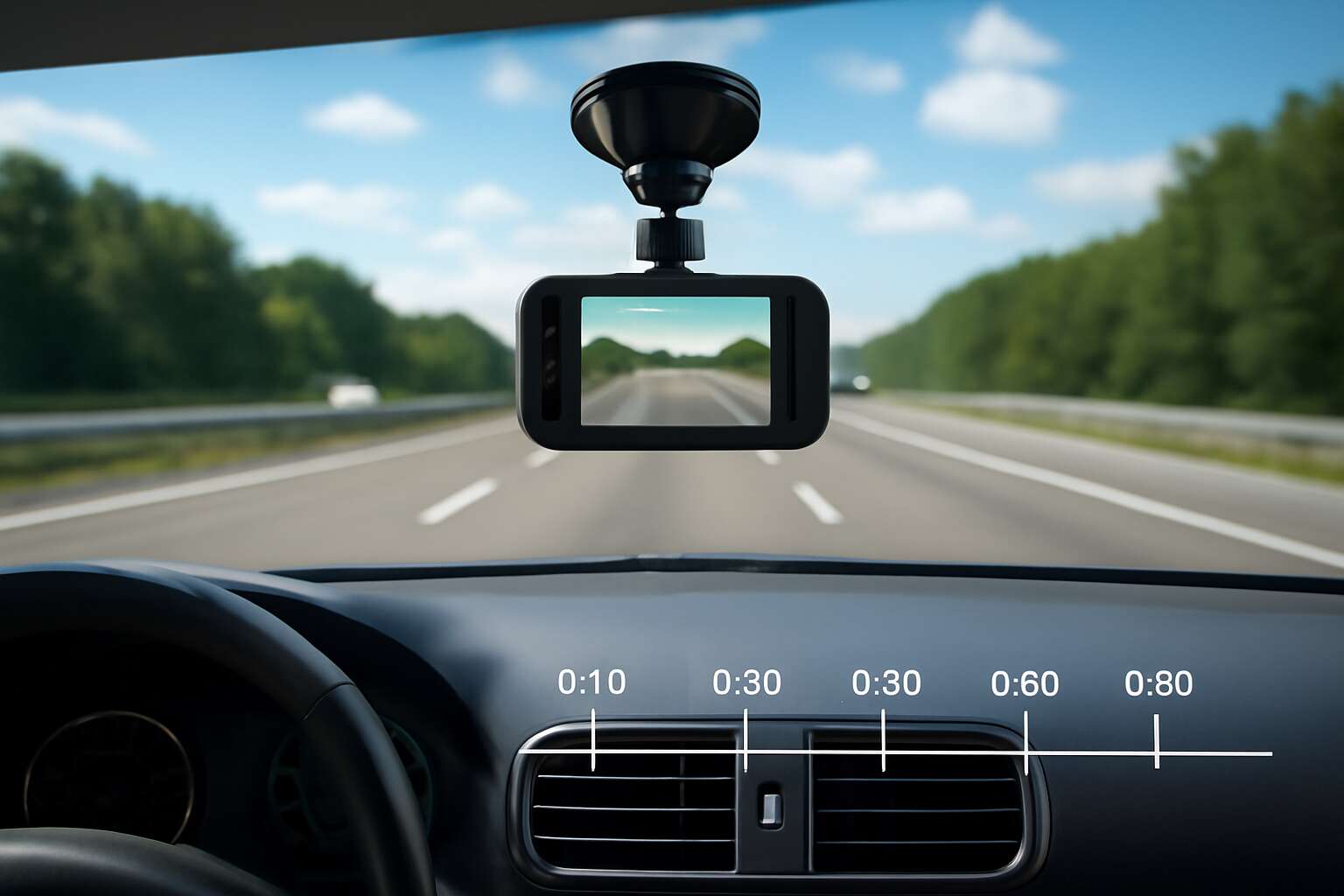
Understanding dash camera footage retention
What determines how long footage is kept
On quiet rural roads, a dash cam’s quiet vigil becomes a record of season and weather. People often ask how long do dash cameras keep footage. A factor shaping that answer is memory: the card size and how the device overwrites old clips as new moments arrive, like the endless turning of seasons across the veld.
Storage capacity and loop recording settings dictate what survives beyond a few sunsets. In practice, some clips are kept only until the card fills, others are preserved when an incident is flagged by the camera’s sensors.
- Storage capacity and loop recording behavior
- Event-triggered saves that extend retention for key moments
- Device policies and firmware that influence automatic retention
Ultimately, retention is a quiet negotiation between hardware limits and the road’s memory—dusty highways and bright horizons that never forget.
Default retention periods for common dash cameras
Footage memory travels with every drive. On South Africa’s highways, dash cams default to looping clips, not keeping every moment. This means the question how long do dash cameras keep footage often comes down to card size and setup choices.
Default retention periods vary by model, but common dash cameras store 1-5 minute files and overwrite oldest footage as the card fills. Higher-resolution modes and larger cards extend the window, while incident saves can freeze clips.
Storage choices and capture settings shape what survives in the long run. For South African roads, retention is a balance of capacity and cadence, not a single universal rule.
Here are common defaults you’ll encounter across popular models:
- 1-minute loop
- 2-minute loop
- 5-minute loop
In practice, pairing the loop length with card capacity makes retention predictable rather than surprising.
How storage type affects retention
Footage vanishes on the turn of a mile marker, yet most dash cams recycle clips every 1 to 5 minutes—the ticking cadence of a drive on South Africa’s roads.
Storage type shapes what survives. A larger microSD card extends the window, while looping erases older moments. Incident saves can lock a clip, and optional cloud backup offers redundancy where supported.
- microSD cards of varying capacity
- built in memory in some cameras
- optional cloud backup
When considering how long do dash cameras keep footage, the answer rests on loop length and card capacity—a balance that resonates across Gauteng’s cities and Cape Town’s coastal roads.
Storage options and limits
Local storage on SD cards and loop recording
Footage fades, memories linger—South Africa’s roads demand reliable records. How long do dash cameras keep footage is not just a tech question; it’s a plan that matches driving habits and climate.
Local storage on SD cards is the most immediate limit. Loop recording converts continuous capture into stacking clips; when the card fills, the oldest clip is overwritten, ensuring ongoing coverage as long as space allows.
- Use high-endurance microSD cards rated for dash cams with reliable write performance.
- Opt for 64GB to 128GB capacity to balance lengthy trips and quick checks.
- Format cards in the dash cam and avoid mixing formats to reduce errors.
- Set a practical loop length (often 1–2 minutes) so footage is easy to review.
In warm climates like most of SA, heat can degrade cards; keep devices shaded and download footage regularly.
Cloud backups and subscription models
On South Africa’s sunlit highways, footage travels farther than the dash cam can store. “Footage is power,” a fleet manager likes to say, and cloud backups magnify that power by storing clips long after the card is full.
Cloud backups open storage beyond the device, with subscription models that scale from single drivers to fleets, keeping footage accessible and protected.
- Flexible retention windows
- End-to-end encryption and tamper protection
- Remote access and secure sharing
Costs shift with storage needs and data speeds, from monthly to yearly plans, and many operators ask how long do dash cameras keep footage, balancing regulatory needs with budget and connectivity.
Storage capacity planning and depletion risks
On SA highways, footage multiplies with every kilometre, and storage runs out faster than you think. Data growth is relentless, so smart management is essential.
Storage options and limits matter for retention. Local SD cards offer fast access, while cloud backups extend reach and safety. A small fleet may rely on a 128 GB card with loop recording, paired with a cloud vault for longer-term clips.
- Card size and overwrite frequency
- Upload speeds and connection reliability
- Retention rules and legal requirements
Storage capacity planning and depletion risks frame the rest. If you’re asking how long do dash cameras keep footage, the answer hinges on space, settings, and whether cloud storage takes the load. Without balance, space runs dry and the most important events risk being overwritten.
Expired footage and overwriting rules
Storage on dash cams vanishes faster than a Durban dusk on South Africa’s busiest highways. The question how long do dash cameras keep footage is not a single number; it hinges on card size, loop settings, and whether cloud storage is part of the plan!
Expired footage follows overwriting rules. A looped local card will replace the oldest clips as space runs out, unless a clip is saved as an event for long-term retention. Cloud backups can push retention further, but depend on connection stability and your subscription.
- Oldest local clips overwritten when storage is full
- Event or manually saved clips stay protected
- Cloud storage offers extended retention, subject to plan
In practice, the outcome will vary by provider and plan, so the question how long do dash cameras keep footage becomes a matter of balancing local capacity with a cloud safety net.
Legal and privacy considerations for dash cam retention
Regional retention laws and guidelines
Retention is law, not luck, as privacy experts remind us. In South Africa, POPIA frames how dash cam footage is stored, used, and shared, turning a storage question into a governance question. That means what you keep, and for how long, isn’t merely a gadget concern—it’s a governance issue.
Regional retention rules vary, but the core obligations are universal: data minimization, purpose limitation, and timely deletion. So, how long do dash cameras keep footage depends on the purpose and the applicable law.
- POPIA compliance: limit retention to what is necessary, with clearly defined purposes.
- Access controls and audit trails: who can view footage and when.
- Deletion policies: predictable timelines and documented procedures.
In practice, institutions align retention with incident risk, privacy expectations, and regulatory responses, ensuring dash cam material serves safety without becoming a privacy gauntlet.
Privacy implications and consent
Footage is a witness that lingers like a quiet gust. “Where there is footage, there must be purpose,” echoes in POPIA’s halls as South Africa treats dash cam retention as governance, not gadget lore. The question how long do dash cameras keep footage becomes a reflection on privacy, data minimization, and lawful use—measured against risk, not nostalgia.
- Clear purpose definitions and finite retention windows
- Robust access controls and audit trails
- Documented deletion timelines and verification
Consent and visibility matter; even under open skies, expectations weave what stays and what vanishes.
Data access controls and security practices
“Footage is a witness that lingers like a quiet gust,” and in South Africa that witness isn’t free to roam. The governance of what stays and what vanishes colors every dash cam decision. how long do dash cameras keep footage is the question that follows.
Legal and privacy considerations demand clarity: purpose, retention windows, and lawful processing under POPIA. Transparent data handling, minimization, and clear deletion timelines guard road-user trust and compliance in the open roadscape.
- Role-based access controls and least-privilege policies
- Encryption at rest and in transit with routine key management
- Audit trails and periodic reviews to verify deletion compliance
These controls thread accountability through the entire footage lifecycle.
Evidence handling and chain of custody
In South Africa, data isn’t a free-range witness. POPIA imposes strict limits on why footage is kept, for how long, and under what lawful basis it’s processed. The question how long do dash cameras keep footage carries real consequences for trust and compliance.
Retention decisions must be purpose-driven and time-bound. Data minimization applies; deletion timelines should reflect investigative needs while respecting privacy. Transparent handling supports accountability and fosters confidence in a system that records daily road use.
Evidence handling and chain of custody require strict discipline. Key safeguards include:
- Chain of custody records showing who accessed footage and when
- Tamper-evident logs and secure storage
- Verified deletion and destruction when the retention window closes
Security measures extend to encryption at rest and in transit with routine key management, alongside robust audit trails and periodic reviews to verify deletion compliance.
Best practices for managing footage retention
Customize retention settings on your device
Dash cameras are more than gadgets; they’re memory vaults on wheels. In South Africa, a surprising majority of drivers find that the right retention settings make footage more usable in a dispute. So, how long do dash cameras keep footage? Customization is king: tailor the retention window to your risk profile and driving patterns, and your footage stays relevant without devouring storage.
Best practices for managing the retention footprint hinge on precise configuration and ongoing checks:
- Align retention with incident cycles and driving frequency
- Preserve events with clear timestamps and meaningful metadata
- Schedule periodic audits to verify data integrity and accessibility
In this landscape, regional norms and privacy considerations matter. A digitally preserved narrative on the road must be auditable and trustworthy, standing as a silent witness when the moment of truth arrives.
Regularly back up important clips
Footage on the dashboard is the road’s quiet witness when disputes flare. In South Africa’s busy lanes, a single clip can tilt a claim. So, how long do dash cameras keep footage? Retention rides on risk, storage, and lawful rights, with disciplined settings keeping truth accessible.
Best practices for managing the retention footprint hinge on precise configuration and ongoing checks.
- Backup strategy to a secure, redundant storage solution with periodic restoration checks.
- Metadata tagging that includes timestamps, location, and concise incident notes for fast retrieval.
- Regular audits of retention policies to ensure data integrity and accessibility over time.
In this landscape, privacy and regional norms matter. A preserved road narrative must be auditable, trustworthy, and ready when the moment arrives in South Africa.
Use motion activation to optimize data
In South Africa’s busy lanes, a single dash camera clip can tilt a claim. So, how long do dash cameras keep footage? Best practices for managing the retention footprint hinge on motion activation to keep only what matters while preserving the integrity of the road narrative.
Adopt a lean approach by tuning settings to capture incidents without drowning storage in routine drives.
- Enable motion-activated recording to ensure footage reflects events rather than idle drives.
- Set adaptive retention so important clips survive longer while ordinary footage cycles out.
- Label and describe saved clips with concise notes to facilitate fast retrieval during audits or disputes.
In this landscape, thoughtful automation becomes a steady compass for safety, privacy, and accountability.
Audit and securely purge old footage
Road narratives are won or lost in the moment dash cams record. In South Africa’s crowded lanes, footage retention is the quiet accountant of truth. Understanding how long do dash cameras keep footage shapes every claim and memory of the road.
Best practices for managing footage retention hinge on disciplined audits and secure purges. The aim is a lean, verifiable archive that preserves integrity and privacy with equal rigor.
- Align retention with local laws and device capabilities.
- Tag clips with incident metadata to ease retrieval.
- Preserve authenticity through tamper-evident logging.
- Apply secure deletion that leaves no recoverable traces.
Such governance becomes a quiet compass for safety and accountability, auditing footprints rather than chasing shadows!
Understanding end-of-retention options and outcomes
Automatic overwriting vs archival storage
Memory is only as good as what you decide to keep, a veteran investigator once told me. That idea anchors end-of-retention choices for dash cameras—the road has secrets, and footage is their testimony. When space runs out, you’re choosing between automatic overwriting and longer-term archival storage. If you wonder how long do dash cameras keep footage, the answer hinges on your retention framework, not a single default.
Automatic overwriting kicks in when space fills; archival storage offers a longer horizon with different costs and access needs.
- Local archival: external drives or NAS for long clips
- Cloud archival: remote retention with encryption and lifecycle rules
- Selective tagging: flag key incidents for extended retention
End results are about reliability, retrieval speed, and privacy balance on South African roads. The end-of-retention option you pick will shape how future investigations unfold and what stays accessible when time reveals the truth.
How to retrieve archived clips
“Footage is testimony you never expected to need,” a veteran investigator told me. Retention isn’t a single number; it’s a policy you set for your fleet. When you ask how long do dash cameras keep footage, the answer is shaped by risk, storage costs, and the pace of investigations. On South African roads, end-of-retention choices define what testimony survives and what remains silent until time reveals the truth.
Archived clips must be retrievable without drama. Local archival and cloud options each carry different access rules and encryption needs. Consider a simple workflow:
- Identify the archive location and confirm access rights
- Filter by date, incident type, or GPS tag to locate clips quickly
- Verify integrity with metadata before sharing with investigators
Retrieval is a core part of reliability, privacy, and trust in the courtroom. The archive becomes a quiet witness that travels with you across the years on South African streets.
Impact of retention policies on evidence quality
Understanding end-of-retention options and outcomes starts with the realization that retention policies are governance, not magic. In South Africa, how long do dash cameras keep footage is a lever that shapes which testimony survives and which fades as the years march on. A well-calibrated policy balances risk, storage costs, and investigation tempo, turning raw clips into a dependable narrative rather than a data swamp.
Consider these high-level end-of-retention options and the outcomes they tend to produce:
- Archive to encrypted cold storage with strict access controls
- Auto-purge on privacy-safe schedules with redaction where needed
- Legal holds for ongoing investigations
Impact on evidence quality hinges on policy design. Longer retention yields richer corroboration and clearer chain-of-custody trails, but privacy safeguards and regulatory alignment must keep pace. When the approach is coherent, the archive becomes a quiet, undeniable witness on South African streets.

0 Comments