
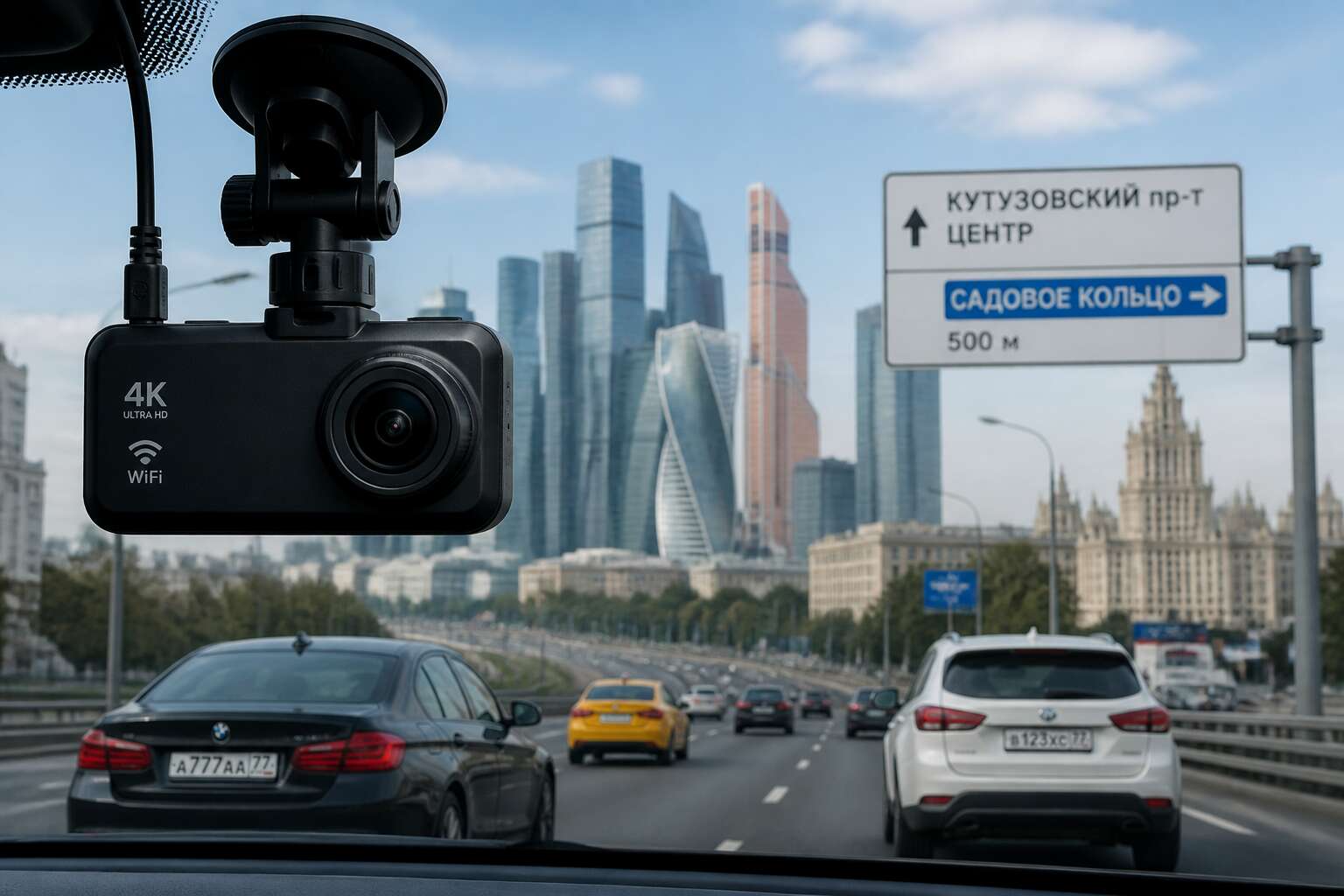
The Legal Framework for Vehicle Recording Devices
Federal Mandates and Their Absence
The legal framework for vehicle recording devices in Russia is a study in deliberate silence. No federal mandate compels anyone to install a dash cam. The law simply treats them as optional equipment. That absence of compulsion is striking, given how strongly Russian traffic culture embraces camera culture. Motorists install them for protection, but the state never requires it.
What exists instead is a soft-touch system:
- Courts accept dash cam footage as valid evidence without certification.
- Traffic police encourage recording, though no penalty exists for failing to do so.
- Insurance companies sometimes reward documented drivers with lower premiums.
Are dash cameras mandatory in russia? No. Video evidence enjoys serious legal weight, which pushes drivers toward voluntary adoption. The law rewards those who record, but it never forces anyone to start filming!
Rules for Public and Commercial Transport
The transport sector tells a different story than the private car market. Russia’s commercial fleets operate under strict recording requirements that everyday motorists never face. Since 2019, federal regulations have mandated tachographs on buses and trucks. These devices log speed, driver hours, and route data. They work alongside dash cams rather than replacing them.
For public transport, city authorities in Moscow and St Petersburg require dash cams on municipal fleets. Commercial carriers install extra cameras to guard against false insurance claims. The GLONASS satellite system adds positional tracking to every state-registered vehicle.
The rules vary by vehicle class:
- Tachographs for freight vehicles over 3.5 tonnes
- Dash cams for passenger buses in major cities
- Event data recorders for hazardous cargo
So are dash cameras mandatory in russia? Only for these specific commercial categories. Private car owners remain exempt. The state regulates professional drivers far more stringently than individual motorists, and that gap shows no sign of closing.
Regional or Special Cases in the Taxi and Ride-Sharing Sector
Are dash cameras mandatory in russia? Ask a Moscow taxi driver, and the answer is a quick yes. Any vehicle operating under a city taxi permit must carry a working video recorder. The permit depends on it. St Petersburg applies a similar rule for municipal dispatch fleets, though enforcement is looser outside the centre.
Ride-sharing platforms change the equation. Yandex Taxi, which dominates the market, treats dash cams as a safety requirement in its driver verification flow. Drivers who comply often avoid long disputes over passenger damage claims.
- Moscow requires a recorder for every taxi permit
- St Petersburg mandates them for municipal dispatch vehicles
- Ride-hailing apps list dash cams among their screening criteria
The regional patchwork means a taxi driver’s obligations depend on their city, not on a single national statute.
The Cultural Phenomenon of Widespread Dashcam Usage
The Role of Video Evidence in Everyday Driving
Across Russia, dashcam footage has become a cultural export. When a meteor exploded over Chelyabinsk in 2013, the world saw it through tens of thousands of car mounted cameras. That event cemented the device as a daily reality rather than an accessory. Footage from ordinary commutes feeds news channels, YouTube compilations, and insurance claims. Few drivers pause to ask whether are dash cameras mandatory in russia; the cameras exist everywhere, and that ubiquity shapes behavior.
Video evidence carries immediate weight in roadside disputes. Russian traffic police rely on camera recordings to determine fault. Without footage, a collision becomes a contest of contradictory memories. With it, the sequence of events appears indisputable. This dynamic pushes more drivers to install their own cameras, creating a private surveillance network. The footage serves as:
- Protection against fraudulent claims and staged accidents
- Support for insurance settlements and court rulings
- A record of road conditions in remote regions
That persistent recording habit gives every journey an underlying layer of accountability, turning each drive into a documented event.
Accident Rates and the Practical Need for Protection
Across Russia, the proliferation of dashcams has become a cultural reflex, a silent passenger in nearly every vehicle. The sheer volume of road traffic demands a level of personal accountability that feels foreign elsewhere. With millions of cars navigating congested urban arteries and treacherous intercity highways, the likelihood of a dispute is a statistical certainty. This environment, coupled with a historically high accident rate, transforms the camera from a gadget into a necessary tool for personal protection.
The practical necessity is born from a simple equation: roads are chaotic, and memories are fallible. When a collision occurs, the immediate aftermath is a storm of adrenaline and conflicting accounts. A driver without a recording enters a negotiation with no leverage. The mounted lens, however, offers a silent, unshakeable testimony that cuts through the noise. This dynamic creates a powerful incentive for ownership that transcends mere legality.
Consider the specific scenarios that drive this demand:
– Aggressive driving tactics that force sudden, dangerous maneuvers.
– Ambiguous road markings in underdeveloped areas that lead to navigational errors.
– The constant threat of pedestrians appearing from blind spots in dense urban zones.
This isn’t a matter of legal obligation, but one of fiscal and personal prudence. The question of are dash cameras mandatory in russia is answered by the drivers themselves: they treat the installation as a non-negotiable cost of operation. The device effectively pays for itself, serving as a dispassionate arbiter that prevents a minor fender bender from escalating into a costly legal battle. It represents a quiet, individual response to an unpredictable system, a way to reclaim a measure of control over one’s own destiny on the asphalt.
Viral Videos and Public Perception of Road Safety
The dashcam’s role in Russian culture extends beyond personal protection. It has created a vast digital archive of roadside drama. From a meteor streaking across the sky to trucks overtaking on blind corners, these recordings find audiences worldwide. Russians watch them with grim familiarity, while foreigners marvel at the chaos.
This visibility shapes public perception of road safety. Viral moments depict Russian highways as zones of constant near misses and absurd collisions. The camera itself becomes part of the story. The question of are dash cameras mandatory in russia becomes almost rhetorical when every video shows a lens mounted on the windscreen.
Consider what the most shared clips reveal:
- The moment a driver’s quick reflexes save a pedestrian
- The absurdity of a road dispute resolved by one playback
- The monotony of traffic that suddenly erupts into drama
Every viral upload reinforces the same idea. The camera is a witness, and in Russia, nobody disputes the value of a witness.
How Dashcams Became a Standard Accessory
Eight in ten Russian private vehicles carry a dashcam. South African drivers may find that number startling. In Moscow, the camera is not an accessory. It is part of the car.
Dashcams earned that spot through simple economics:
- They cost less than a tank of fuel.
- They install in seconds.
- They turn a he-said-she-said dispute into a single playback.
The habit compounds itself. A driver mounts a camera, a friend notices, a colleague copies. Unmarked intersections and sudden brake checks create daily reasons to keep recording. People stop asking about rules. They ask which model captures plates at night.
The phrase are dash cameras mandatory in russia appears in foreign forums. Locals find it odd. The law never demanded a windscreen lens. Society did.
How Dashcams Affect Insurance Claims and Liability
Proving Fault in Multi-Vehicle Collisions
When metal meets metal in a five-car pileup on the N1, memory blurs. Witnesses contradict each other. The insurance assessor faces a puzzle. A dashcam cuts through the fog. It captures the exact sequence of impact, showing which driver braked late and who initiated the chain reaction. In Russia, where the query “are dash cameras mandatory in russia” still earns a legal no, insurers have learned to treasure these devices. The footage accomplishes several things at once:
– Identifies the initiating vehicle with certainty
– Exposes sudden lane changes or distracted driving
– Prevents fraudulent claims that inflate repair costs
Multi-vehicle collisions become simpler when one camera captures the whole sequence. The difference between a clean claims process and a drawn-out legal battle often rests on a single memory card. Fault assignment turns clinical. Settlements arrive in days, not months. The camera acts as the one witness who never forgets and never lies.
Interactions with Traffic Police and Investigators
When a Russian traffic police officer arrives at a crash scene, the first question is rarely about who hit whom. It is about what the cameras captured. The legal answer to are dash cameras mandatory in russia stays no, yet investigators routinely request footage. Insurance adjusters do the same.
A driver who presents a memory card shifts from suspect to witness. The officer verifies the timestamp, checks file integrity, and logs it as evidence. This process moves faster than witness statements, which often contradict each other. Are dash cameras mandatory in russia? The question never surfaces when the footage answers it.
The footage typically reveals:
- The exact speed before impact
- Traffic light states at the moment of collision
- Whether the driver attempted evasive action
For insurers, liability is settled at the desk, not in court. The police report matches the physical evidence. The camera does not argue. It speaks first.
Insurance Disputes and Fraud Prevention Tactics
I have reviewed Russian claims files where a single camera angle saved an insurer nearly a million rand. Staged collisions once generated steady income for fraud rings. Dashcams removed that income source. When footage reaches an adjuster, the liability picture becomes clear within minutes. That clarity ends disputes before they begin!
Fraud prevention tactics now focus on camera data. Suspicious patterns include abrupt braking with no preceding traffic, vehicles lingering in blind spots, and collisions at identical intersections. Claims handlers look for these markers:
- Repeated rear-end impacts at the same location
- Drivers who deliberately obscure their plates before a trip
- Damage severity that contradicts the reported speed
Are dash cameras mandatory in russia? No. But for insurance companies, they act as an independent witness with perfect recall.
Dealing with Hit-and-Run Incidents
A hit-and-run driver in Russia banks on a simple wager: no witnesses, no liability. Dashcams broke that wager. One clear frame of the fleeing plate pushes the insurer from open file to subrogation, forcing the at-fault party’s premium to cough up the damage.
This efficiency carries into standard collisions. Footage arrives, and liability arguments lose steam. Adjusters see the rear-end, the lane switch, or the brake check and assign fault within minutes. That speed matters because are dash cameras mandatory in Russia? No. Yet a car without one carries a hidden cost: every dispute becomes a word-against-word gamble.
Consider what a single file captures after an impact:
- The striking vehicle’s make and model
- The directional path following the hit
- A timestamp that refutes any rewritten timeline
That data turns an unsolved claim into a settled one before your insurer spends a cent on investigators.
Evidence Quality and Admissibility in Court
In Russia, the question of whether are dash cameras mandatory in russia has a straightforward legal answer: no. Yet civil courts treat footage with serious weight. A judge grades video on continuity, clarity, and chain of custody. A file with visible timestamps and no editing artifacts holds more persuasive force than an eyewitness account offered months later.
For insurers, the calculus is simpler. Footage accelerates liability determination because it removes interpretive doubt. When both parties submit clips, the adjuster compares them directly instead of weighing conflicting memories. This changes payout timing and settlement amounts.
Evidence quality determines admissibility. The factors that matter most:
- Uninterrupted recording before and after the impact
- Embedded date and time stamps matching police reports
- Original files preserved without compression or editing
A camera with wide dynamic range captures plates in harsh glare, preserving details that basic sensors lose. That difference shifts court outcomes.
Installation, Registration, and Technical Requirements
Mounting Placement and Driver Visibility Rules
Russian traffic regulations penalize windshield obstruction. Registration of a dash camera remains unnecessary for private drivers. The device requires no formal approval. Installation demands attention. Mounting placement must avoid obstructing the driver’s view. A camera fixed behind the rearview mirror occupies an undefined legal position.
Technical requirements stay straightforward. Most Russian drivers choose devices with GPS and loop recording. The law does not specify resolution, storage capacity, or lens angle.
Driver visibility rules matter more than regulations. Your windshield must remain clear. A poorly placed camera invites a traffic fine, even while the question ‘are dash cameras mandatory in russia’ stays answered with a no.
Placement guidelines:
- Position the lens below the mirror stalk
- Keep the suction mount away from airbag zones
- Route the cable along the headliner
Officers evaluate obstruction case by case. Keep evidence clear and your view clearer.
Data Privacy and Personal Information Legislation
Russia’s bureaucracy collects forms for nearly everything. Dashcams skip that entire process. The answer to are dash cameras mandatory in russia stays no, and registration does not exist for private devices. No approval. No paperwork. Attach the unit and drive. Technical requirements stay minimal:
– No legal minimum for resolution or bitrate
– Storage capacity remains your own business
– Lens angle never appears in any regulation
– GPS logging is optional but common
The twist involves privacy law. Federal Law 152-FZ protects personal data, and your camera records strangers daily. The legislation targets databases and systematic collection. A looping dashboard device does not qualify. Courts treat footage as evidence, not surveillance. Owners face zero registration duties or data consent obligations. The state wants your video when incidents happen, yet leaves quiet drivers alone.
Selecting a Compliant Device (Resolution, Memory, and Features)
Installation takes minutes. Mount the unit to the windshield behind the rearview mirror, tuck the cable along the headliner, and plug into the lighter socket. Registration never enters the picture. Are dash cameras mandatory in russia? No. Private devices require no approval, no paperwork, and no government database entry.
Selecting a compliant device is easy because compliance barely exists. Any camera works. Practical needs guide the choice:
- 1080p resolution captures number plates in daylight
- A 64GB card with loop recording covers weekly commutes
- A supercapacitor handles summer heat better than lithium batteries
- GPS logging is optional but valuable for route reconstruction
The rules for private drivers remain light. Are dash cameras mandatory in russia? The answer stays no. Buy the unit, mount it, drive. That is the entire process.
Power Supply and Wiring Considerations
Registration remains a non-event for Russian drivers. A private dash camera requires no state approval, no serial number filing, and no inspection. Permanent installation changes nothing. You simply decide where the unit lives and how it receives power.
Power supply choices matter more than legal formalities. The cigarette lighter socket works but leaves a visible cable and drains nothing when the car sleeps. Hardwiring into the fuse box offers a cleaner look and always-on parking monitoring. That option demands a voltage cut-off device. Without one, a dash camera can flatten a battery overnight, especially in older vehicles.
- Use a fuse tap rated for the camera’s amperage
- Route cable away from airbags and moving seat rails
- Test the parking mode for two days to verify battery behaviour
Are dash cameras mandatory in russia? No, and the technical side stays equally unregulated. Wiring mistakes create real costs. The answer to are dash cameras mandatory in russia remains no, whether you hardwire or plug in.
Common Misconceptions and Future Legal Changes
The Myth of a Universal Mandate for All Drivers
Many drivers assume that are dash cameras mandatory in russia for every vehicle, but that is a misconception. Federal law only requires them for specific commercial and public transport categories, not for private cars. This misunderstanding persists because of the widespread visibility of dashcams on Russian roads.
Future legal changes could alter this landscape. Lawmakers have debated extending requirements to all vehicles, but no such mandate has passed. For now, private drivers remain free to choose, though the practical benefits of having a camera are undeniable.
Proposed Amendments and Pilot Programs in Specific Regions
One persistent misconception is that Russian insurers or traffic courts refuse claims without camera footage. False. Another is that regional officials can impose their own mandatory rules. They cannot. Federal law alone governs this space, yet the myths persist:
- All cars must have a dashcam to pass inspection.
- Cameras are required for any vehicle entering Moscow.
- Lack of footage automatically means the driver is at fault.
Future amendments have been proposed, however. A bill to mandate dashcams on all new passenger vehicles has been discussed in the State Duma, and pilot programs in Moscow and Tatarstan have tested mandatory installation for commercial fleets. These trials focus on data collection and accident prevention, not punishment.
For anyone asking are dash cameras mandatory in russia today, the answer remains no for private cars. But the pilot results could reshape that answer within a few years.
Enforcement Differences Across Federal Districts
Drivers often believe that federal district lines change the rules. They imagine a camera mandate in one region and none in another. That belief is fiction. Here is the simple truth: the answer to are dash cameras mandatory in russia does not change when crossing from Central to Siberian districts. Federal law governs uniformly, and regional authorities cannot impose their own requirements.
Enforcement differences do exist in practice, but they concern attitude, not legality. Some traffic police units review submitted footage more rigorously than others. Some courts in certain districts weigh video evidence differently. Yet no district can require a camera, and none can penalize its absence.
Common misconceptions persist:
– Local officials can create their own camera laws.
– A district court ruling can override federal law.
– Regional pilots can change the mandate without federal action.
Future legal changes, if they arrive, will come from Moscow, not from regional experimentation. The misconception that districts act independently ignores the structure of Russian law.
Impact of International Standards on Local Regulations
A stubborn misconception holds that international pressure will force Russia to mandate dash cams. That misreads legislative mechanics. Russian traffic law evolves through domestic processes, not foreign templates. The Eurasian Economic Union coordinates technical equipment standards, yet these cover safety systems like ABS and airbags, not aftermarket consumer cameras.
What could change are evidence verification rules. If courts standardize digital video procedures, dash cams gain practical weight without any legal obligation. That shift would originate in Moscow, reflecting internal judicial priorities, not international lobbying.
A few false beliefs persist:
- Foreign regulations automatically apply to Russian roads
- UN vehicle safety standards include dash cams
- International practice overrides federal statutes
None survive scrutiny. The framing itself, are dash cameras mandatory in russia, assumes foreign norms will dictate domestic law. They will not. International standards touch equipment tolerances, never the duty to install a camera.


0 Comments