
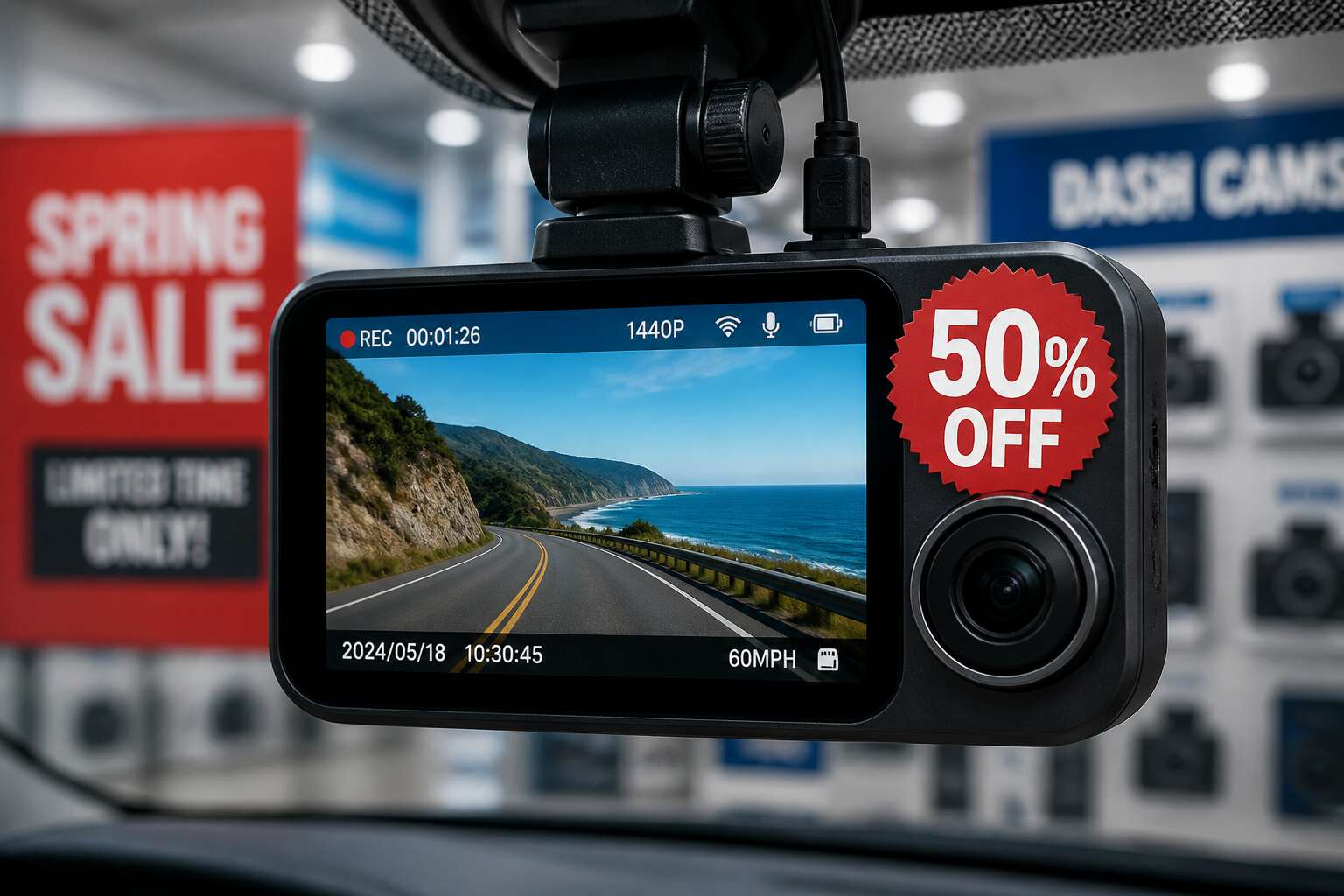
Understanding Dash Cam Pricing
Base Price Ranges by Resolution
The average price of a dash camera in South Africa hides a far more interesting story. The real cost is dictated by what the lens can actually see, and this creates a clear hierarchy in the market.
For most daily commuters, a 1080p Full HD unit represents the entry point into the world of visual protection. These devices typically command a base price between R800 and R1,500. They capture number plates clearly in daylight, which is a solid foundation for basic peace of mind. However, you are paying for the essential function without any of the high-end frills.
Stepping up to 2K or Quad HD resolution changes the landscape entirely, and this is where the dash cameras sale market gets interesting. You will find these mid-tier models priced from R2,000 to R3,500. The clarity in low light conditions improves dramatically, and the extra pixels allow you to crop into the footage without losing vital details. It is the sweet spot for most drivers who want tangible quality without stretching their budget.
At the premium end, 4K Ultra HD systems start around R4,000 and climb sharply from there. This tier often includes the most advanced optical sensors and robust build quality. The price difference between these tiers is partially about resolution, but it is also about the secondary features attached to the device.
– 1080p units often lack built-in GPS or rely on simpler mounting systems.
– 2K models frequently include Wi-Fi connectivity and better night-time processing.
– 4K flagships usually boast top-tier collision sensors and discreet, compact housings.
Understanding this spectrum is crucial before you commit. A cheaper unit might fail to read a speeding car’s registration in poor weather, while a top-tier model offers a tangible safety net. When you browse a dash cameras sale, match the resolution to your specific driving environment. It is the single most effective way to ensure you are not overpaying for pixels you will never use, nor underpaying for protection you truly need.
Why 4K Models Cost More
Why does a 4K dash camera cost three times as much as a Full HD model? The answer lies far beyond the pixel count. It is about the quality of the light sensor, the capacity of the image processor, and the efficiency of the heat dissipation system. While a 1080p unit captures adequate detail, a 4K system captures the fine grain of a number plate or the subtle movement of a pedestrian in a way that can make all the difference during an insurance claim.
The most significant cost driver is the sensor itself. A budget 4K camera might use a small sensor that struggles in low light, producing grainy footage that defeats the purpose of the high resolution. Conversely, a premium model uses a larger, more sensitive sensor. This hardware allows more light in, which means you get sharp, clear images even when the sun has set. This optical quality is not a software trick; it is a physical component that is expensive to manufacture and license.
Then there is the data bottleneck. A 4K stream produces a massive amount of information every second. A cheaper processor will compress this data aggressively to save space, which leads to artefacts and blocky images. A high-end processor handles the compression with more intelligence, retaining crucial details while keeping file sizes manageable. This processing power also affects the camera’s ability to support features like HDR and frame rates of 60fps, which are essential for capturing motion without blur.
When you browse a dash cameras sale, keep these key specifications in mind. You are not just paying for more pixels; you are paying for the ability to use them. Look for these features in the product description:
– Aperture size (look for f/1.8 or lower for better low light performance)
– A high bitrate (at least 40 Mbps for 4K footage)
– A Sony STARVIS sensor or equivalent
– A Supercapacitor for reliable power and heat resistance
The promise of 4K is only as good as the lens it is captured through. A premium lens with a glass element ensures that the image is sharp across the entire frame, preventing distortion at the edges. This clarity is what turns a piece of video evidence from a blurry shape into a definitive identification. The higher price tag on a 4K model reflects the engineering required to handle that level of detail without the system overheating or failing. Ultimately, in a dash cameras sale, the premium you pay is for the confidence that the crucial moment will be captured in perfect detail when you need it most.
The Impact of Storage and Connectivity
Storage and connectivity quietly dictate what you will pay during a dash cameras sale. A 4K unit writing continuously at high bitrates demands a high endurance microSD card. Cheaper models accept any card but fill it quickly, leaving gaps in coverage. Premium units include buffered parking mode, which writes only when impact is detected. That saves space and card wear.
Connectivity adds another layer. Built in Wi-Fi or 4G allows live viewing and cloud uploads. In South Africa, where load shedding makes hardwired installations unpredictable, a camera with a supercapacitor and reliable mobile connectivity offers genuine peace of mind. These features require licensed radio modules and software development, which pushes the price up. I have seen buyers overlook this until their card corrupts at the worst moment!
How Brand Reputation Affects Price
Best Times to Buy on a Budget
Black Friday and Cyber Monday Window
The timing of a dash cameras sale is a strategic game. Prices rarely stay still, and understanding the pattern is your best defense against paying full price. The Black Friday and Cyber Monday window is the prime hunting ground, but the field changes daily.
Expect tiered deals as the season progresses. Early week discounts often target older stock, while the deepest cuts land on the final Sunday. Retailers are measuring their inventory, and you can measure their desperation.
This period offers specific advantages:
– Bundled kits with hardwire cables or larger memory cards
– Price matching opportunities from competing retailers
– Free expedited shipping on high-value orders
For South African shoppers, the local landscape adds a unique layer. International brands slash prices, but local stockists in Johannesburg and Cape Town often hold their ground until the final day. Patience is your ally. The best prices surface when the fear of unsold inventory outweighs the desire for profit. Watch the exchange rate, compare local store deals against global discounts, and strike when the numbers align. The window is short, but the reward is a premium unit at a fraction of the cost.
End-of-Year Clearance Events
January clearance racks in Johannesburg hold some of the year’s best prices. After the Black Friday rush fades, the December lull begins. Shoppers spend on holidays, not electronics. Retailers face a different problem: warehouses full of units that must move before the new year. The dash cameras sale momentum shifts from aggressive discounting to quiet negotiation.
Boxing Day and early January produce the clearest opportunities. Stockists discount what they cannot justify carrying into the new accounting period. We have seen these clearance markers before:
- Open-box returns from holiday purchases
- Discontinued models making room for next year’s lineup
- Units with older processors, still capable but no longer headline items
These units offer the same recording capability for a fraction of the original price. The dash cameras sale window extends into mid-January as retailers in Cape Town and Johannesburg match each other’s clearance pricing, and the rand’s movement decides the final figure.
Back-to-School and Spring Promotions
The quietest months often hide the loudest bargains. In South Africa, the back-to-school period in January and the spring promotions in September create distinct buying windows for tech.
After the December rush, demand for dash cameras sale events dips sharply. Parents tighten budgets for school fees, and retailers adjust stock levels accordingly. This lull benefits the patient buyer. Similarly, spring brings a focus on home improvement and travel, prompting retailers to clear older electronic inventory.
Consider these seasonal advantages:
– Back-to-school bundles: Look for starter kits that pair a camera with a memory card, a handy way to save extra.
– Spring trade-in offers: Some retailers provide discounts for trading in older driving tech, reducing the price of a newer model.
The pricing logic is tied to the calendar. Focusing on these dates rather than the holiday frenzy often yields the best value for a quality dash cam.
Where to Discover Discounted Dash Cams
Major E-commerce Retailers
Some shoppers assume the best dash cameras sale deals vanish once the calendar flips past January. That assumption is wrong. The real bargains often surface in the months nobody watches. Major e-commerce retailers rotate their inventory like a restaurant changes its menu, and clearance sections become goldmines for last year’s models that still perform admirably.
We have found that the trick is to sort listings by “newly listed” and “price drop” rather than searching for a generic dash cameras sale banner. Retailers like Takealot and Loot frequently discount stock when newer versions arrive. They do not shout about it. You have to scroll through the automotive accessories category and check the seller ratings before you commit.
Where to look for these hidden discounts:
– Amazon’s warehouse deals, which include returned items that work perfectly
– Takealot’s daily deals section, refreshed at midnight
– Loot’s clearance page, updated every Thursday morning
– Bidorbuy’s auction lists, where starting bids can be absurdly low
The stock levels on these platforms fluctuate wildly. A unit priced at R1,200 one week can drop to R850 the next if the warehouse needs space. Keep a mental note of the models you want, then refresh those specific product pages every few days. The algorithm bumps prices down when nobody is looking, a quirk of automated repricing that works in your favor. This strategy requires patience, but the savings make the wait feel karmically correct. Just remember to verify the warranty terms before clicking the checkout button, because some marketplace sellers offer zero after-sales support.
Brand Official Outlet Stores
The hunt for a quality dashcam often feels like navigating a maze of inflated prices and questionable deals. Yet, the most reliable discounts are hiding in plain sight, tucked away in the official brand outlets that many drivers overlook.
These dedicated storefronts exist specifically to move older stock, refurbished units, and open-box returns. The discounts here are substantial, often reaching 30 percent or more off the retail price. A flagship model from last year, with the same sensor and lens, becomes a budget-friendly option without the risk of buying from a third-party seller with no accountability.
To find these savings, ignore the general search engines and go directly to the source.
– Check the brand’s official website for a dedicated “Outlet” or “Certified Refurbished” section.
– Look for a newsletter sign-up; brands frequently send exclusive coupons for outlet items.
– Search for the brand’s official store on major e-commerce platforms; they often have a separate clearance page.
The key is patience. Stock rotates slowly, but when a new model launches, the previous generation hits the outlet almost immediately. Waiting for that cycle gives you the best price and the peace of mind that comes with a proper warranty. This method cuts through the noise of the traditional dash cameras sale event, delivering a high-performance device for a fraction of the cost. Focus your efforts there, and you will avoid the disappointment of a wasted purchase. Bookmark those pages and check back weekly; the best units disappear fast.
Refurbished and Open-Box Options
Refurbished and open-box dash cams deliver near-new performance at a fraction of the retail price. I have learned that the trick is finding them. Manufacturer certified programs offer tested units with warranty coverage. Retailer open-box sections, like those on major e-commerce platforms, rotate constantly. Auction sites work too, but they demand sharper attention.
- Check the brand’s certified refurbished page
- Browse the open-box category on trusted retailers
- Set alerts on local marketplace apps
Each unit has its own condition. A returned camera may have a minor cosmetic flaw, while a refurbished one has been fully restored. The warranty terms vary, so read carefully. For a careful buyer, these paths turn an ordinary dash cameras sale into something far more rewarding. Check the listings often, because the good ones vanish within hours!
Price Comparison Tools and Alerts
Social Media Flash Deals
Where to Discover Discounted Dash Cams
Social media has quietly become the best place to spot a genuine dash cameras sale before it goes public. Brands often reward their loyal followers with exclusive promo codes and early access to flash events. If you are serious about saving, you need to look beyond the standard retail homepage and check what is happening on the platform’s story features or live streams.
I have found that smaller, enthusiast-driven communities are often the first to share a verified deal. Retailers post limited-time offers to their social channels to clear inventory quickly, and these discounts rarely appear anywhere else. Here is what I watch for when scrolling through my feed:
– Live video demonstrations where the host announces a site-wide discount code.
– Polls or Q&A sessions that unlock a special price for participants.
– Giveaways that include a voucher for a future purchase.
– Tagged posts from influencers who have a specific tracking link for a reduced rate.
Following the major brands and turning on post notifications can put you ahead of the curve. Engaging with the content also helps, as some companies send direct messages with a private link to their active dash cameras sale. It takes a bit of effort, but the savings on a high-resolution model often make the extra attention worth your time.
Key Features to Prioritize When Bargain Hunting
Video Quality vs. Price Ratio
It’s easy to get blinded by a low price tag on a dash cameras sale, but the true measure of value lies in the footage quality when you need it most. A grainy, blurry clip of an accident is virtually useless for an insurance claim. Prioritize a model that records in at least 1080p Full HD. This resolution strikes the perfect balance between crisp detail and manageable file sizes, ensuring you can read license plates without breaking the bank on a massive memory card.
Beyond raw resolution, consider the frame rate. A standard 30 frames per second (fps) is fine for city driving, but 60 fps offers silky-smooth playback, which is vital for capturing fast-moving objects like a swerving motorcycle or a reckless overtaker on the highway. Think of it as buying insurance for your insurance; the better the sensor, the more reliable the protection.
When you are hunting through the discounts, keep these essential specs in mind:
– Aperture (F-stop): A lower number (like f/1.8) means the lens lets in more light, which translates to dramatically better night vision.
– Wide-Angle Lens: Look for 140 to 160 degrees to cover multiple lanes without creating a distracting fisheye effect.
– Supercapacitor: Instead of a regular battery, this tolerates extreme South African heat, preventing the unit from failing in the Durban or Upington summers.
During your search, always take the promotional price and compare it against the feature list. Many brands will slash the price of their older models, which are still excellent. You might even find that a dash cameras sale includes a free high-endurance SD card, a necessity since standard cards can corrupt from constant writing. In the end, the right unit provides peace of mind as you navigate the bustling streets of Johannesburg or the long, quiet stretches of the Karoo, and that is a purchase that justifies its cost every time.
Essential Safety Features Like Buffering
The road is an unpredictable theatre, and the curtain can rise at any moment. You might be driving through the quiet suburbs of Pretoria or navigating the chaotic flow of the M1, and in a split second, a reckless overtaker or an uninsured minibus taxi could force a collision. When the dust settles, your memory might be hazy, but your dash cam will remember everything. This is why scouring a dash cameras sale for the right equipment is not just about saving a few Rand; it is about securing your version of events.
As you browse the deals, however, you must separate the shiny gadgets from the reliable guardians. A low price is tantalising, but a device that fails to capture a number plate at dusk is merely a plastic ornament. You need a unit that excels in the dark, where the shadows often hide the details that matter most. Look for a model with a wide aperture, something like f/1.8. This allows the lens to drink in the ambient light of the city streets, turning a murky night-time scene into a clear, legible record. Without this, your footage is just a murky smear of headlights.
Beyond the darkness, the breadth of your vision is critical. A lens that only sees a narrow slice of the road misses the crucial context of an incident. A field of view spanning 140 to 160 degrees is the sweet spot for a reason. It captures the pedestrian stepping out from between parked cars, or the vehicle that clips your side mirror as it squeezes through a gap. This wide perspective ensures that the entire story is told, not just the part directly in front of the bonnet.
There are two more silent workhorses you should demand from any premium unit you find on special.
– Supercapacitor over battery: Standard lithium batteries can swell and die under the harsh reality of a South African summer dashboard. A supercapacitor, however, is built to withstand extreme heat, ensuring your camera survives the very conditions it needs to record.
– GPS logging: This feature quietly tracks your speed and coordinates. It provides an unassailable layer of evidence, proving you were within the legal limit and correctly positioned in your lane when the unexpected occurred.
Ultimately, a dash cameras sale is the perfect time to acquire this peace of mind. Whether you are traversing the winding bends of the Outeniqua Pass or sitting in the daily gridlock of Sandton, the value lies not in the price tag, but in the definitive proof you hold in your hands. A bargain is only a bargain if the camera works flawlessly when your heart is pounding and your voice is shaking. Choose the technology that stands as your silent, unflinching witness, and you will never regret the investment.
Loop Recording and Parking Protection
The open road is a stage for the unexpected, a theatre where a moment of carelessness can rewrite your entire narrative. In South Africa, where the landscape shifts from bustling city arteries to remote, winding passes, that unpredictability is a constant companion. Consider this: a single, ambiguous incident can become a battle of he-said-she-said, a frustrating stalemate with insurance companies and the law. Your memory, clouded by adrenaline and shock, is a fragile witness. Your word, however honest, carries less weight than cold, indisputable fact. This is the quiet, compelling argument for investing in a reliable witness, a device that sees all and forgets nothing.
Yet, navigating the vast market of dash cameras sale can feel like wandering through a fog. The sheer volume of options, each boasting impressive specifications, is overwhelming. The alluring promise of a low price tag often hides a critical weakness: the very technology designed to protect you might falter when you need it most. A camera that produces blurry, unreadable footage at night is a decorative trinket, not a guardian. To find true clarity, you must look past the superficial glamour and delve into the components that determine its performance in the real, often harsh, South African environment.
The first and most vital attribute to scrutinise is the image sensor and lens combination. The ability to capture a crisp license plate, not just a smear of light, is the difference between a resolved claim and a costly battle. A wide aperture, such as f/1.8, is paramount; it allows the lens to drink in the ambient light of dusk or a dimly lit street, transforming potential darkness into a legible scene. Without this, your footage degenerates into a murky, useless blur. Furthermore, the field of view requires careful consideration. While ultra-wide lenses sound impressive, they can distort images and fail to capture crucial details. A balanced angle, typically between 140 and 160 degrees, provides comprehensive coverage of the road ahead without sacrificing the clarity needed for reading plates in your lane and the ones adjacent.
Beyond the lens, consider the humble battery, a component often overlooked until it fails. The fierce heat inside a parked car in a South African summer is a notorious enemy of standard lithium-ion batteries. They can swell, degrade, and eventually die, leaving your camera powerless during a parking lot hit-and-run. The modern solution is a capacitor-based power supply. These do not rely on volatile chemistry and are engineered to withstand extreme temperatures, offering a longer lifespan and greater reliability. Choosing a model with this technology is a strategic decision, ensuring your device is ready for action even after being baked in the sun all day. For those who park on the street, this feature, combined with a parking mode that activates upon impact detection, is non-negotiable. It is the silent sentinel that observes the aftermath of an incident while you are away, capturing the details of the vehicle that dared to intrude upon your space.
Finally, let us not forget the quiet power of evidence in its most precise form. While video is powerful, it is the embedded data that often seals the deal. Built-in GPS logging is a feature that should not be dismissed as a mere novelty. It meticulously records your speed and coordinates, embedding a layer of undeniable truth onto your footage. When an incident occurs, this information can swiftly demonstrate that you were not exceeding the limit or that you were in the correct lane. This is not just about proving your innocence; it is about streamlining the entire claims process, cutting through bureaucratic delays, and providing your insurer with the exact facts needed to move forward. As you scour the available options, perhaps during a significant promotional period, these are the pillars upon which a wise decision rests. They are the difference between a cheap gadget and a veritable instrument of protection.
Compatibility with Smartphone Apps
When you shop a dash cameras sale, the sheer number of options can be overwhelming. It is tempting to grab the cheapest unit, but that often leads to poor performance when you need it most. Instead, focus on a few specific components that determine real-world reliability. The lens and sensor are the heart of the device. Look for a model with a wide aperture, ideally f/1.8 or lower, which allows more light to hit the sensor. This translates to clearer footage during night driving, a critical factor for security and insurance claims.
Beyond the camera itself, the method of power storage is a frequent point of failure. Many budget units rely on standard lithium-ion batteries, which degrade quickly in high temperatures. In a South African summer, the inside of a car can become brutally hot, causing these batteries to swell and eventually die. A dash camera with a capacitor-based power supply is a superior choice for local conditions. Capacitors handle extreme heat far better and have a longer lifespan, ensuring your device is always ready to record.
While hardware matters, daily usability is defined by the interface. This is where Compatibility with Smartphone Apps comes into play. A built-in screen is useful for setup, but reviewing footage on a small display is tedious. A robust mobile application allows you to download clips directly to your phone, share them with your insurer, and adjust settings without leaning over the dashboard. When evaluating a dash cameras sale, check the app’s user reviews. A buggy or difficult-to-pair app will turn a simple task into a frustrating chore.
Before you finalize a purchase, consider these non-negotiable features for a stress-free experience:
– Loop Recording: This feature automatically overwrites old footage, ensuring you never run out of storage space on the microSD card.
– Parking Mode: It uses motion detection or impact sensors to monitor your vehicle while it is parked, protecting you from hit-and-run incidents.
– GPS Logger: This records your speed and coordinates, proving your innocence in a dispute and providing precise location data.
A typical dash cameras sale might showcase high resolution and wide angles, but these specs mean nothing without a stable power source and a reliable application. Prioritize the capacitor over the battery, and the software over the megapixel count. By focusing on these lesser-known but vital details, you secure a tool that remains a silent guardian, ready to capture the truth when you are not looking.
Avoiding Common Pitfalls with Cheap Dash Cams
Warranty and Return Policy Checks
A third of budget dash cams fail within six months. That statistic should shape how you approach any dash cameras sale. The lowest price often hides a short warranty and a return policy that requires shipping to China.
Before buying, inspect the fine print. South African retailers sometimes offer local warranties, while grey imports do not. Ask about replacement units and who covers courier costs.
Check if the seller requires the original packaging and a video of the fault. Some demand both. Others refuse returns once the adhesive mount is used.
If a deal during a dash cameras sale feels too good, verify the warranty period. A 12 month local warranty beats a 30 day return window every time.
Beware of Counterfeit Products
Finding a bargain during a dash cameras sale is easy. Finding a bargain that actually works is harder. The market is flooded with unbranded electronics, and South African roads are tough on inferior tech. The heat inside a parked car alone can warp cheap plastic housings and cause lens blur. A camera that fails during an accident is worse than no camera at all.
The most common trap involves counterfeit stock. Popular brands get cloned, and these fakes often look identical on the outside. They are sold on online marketplaces at prices that undercut legitimate retailers by significant margins. However, the internal components are usually inferior. The video quality might look good on a phone screen, but when you zoom in to read a license plate, the image will be a pixelated mess.
Here is a quick checklist for inspecting any unit on sale:
– Verify the packaging for holographic seals or batch numbers.
– Check the stitching and rubber gaskets for consistency.
– Weigh the device in your hand; cheaper units feel noticeably hollow.
Warranty claims are another area where buyers get burned. A short warranty is a red flag. If the seller only offers a 3-month warranty, they know the hardware is likely to fail soon. Conversely, a reputable seller offering a 12-month replacement warranty is taking on risk, which usually means they trust the product. Always ask for a physical store address. A courier drop-off point that closes next month won’t help you when your power cable snaps.
The return process for international fakes is designed to be impossible. If you need to send a defective unit back to a warehouse in Hong Kong or Shenzhen, the shipping cost will often exceed the price you paid. You will be stuck with a brick. Local consumer laws offer protection, but only if you buy from a registered entity. If you buy from a random seller with a postal box, your rights are limited.
Even the more reputable budget brands have limitations you should know about. They often rely on supercapacitors instead of lithium batteries. While this is better for heat resistance, supercapacitors lose their charge quickly. If you are parked for a few days, the recording will stop. The parking mode in these units will also drain your car battery faster than a premium model.
Also, double check the memory card slot. Many budget units struggle with high-capacity cards. They may instantly format a 128GB card as empty or refuse to write to it. This defeats the purpose of using an endurance card for long commutes. Test the card in the store if possible. If the salesperson hesitates, walk away.
When you spot a deep discount, ask yourself what the seller is cutting to hit that price. Is it the lens glass? The adhesive quality? The internal processor for night vision? The hardware matters more than the feature list on the box. A 4K resolution on paper means nothing if the bitrate is too low to capture clear details at 60 km/h.
The bottom line is that the cheapest option in a dash cameras sale is rarely the most cost-effective. Pay a little more for a model with a proven track record in hot climates. Your insurance claim will thank you later.
Realistic Expectations for Low-Cost Models
Avoiding Common Pitfalls with Cheap Dash Cams
Buying from a deep discount bin can save you money upfront, but the hidden costs often surface later. The primary issue with ultra-budget dash cameras is heat resistance. Interior car temperatures can exceed 70 degrees Celsius in a South African summer. Inexpensive plastic housings and internal batteries are not designed for this. They warp, swell, or simply shut down permanently. Look for a unit with a supercapacitor instead of a lithium battery, and check if the lens is made of glass rather than plastic. A plastic lens will distort the image within months of direct sun exposure.
Another frequent problem is memory card handling. Low-cost models might struggle with newer high-capacity cards, causing corrupt files or constant reformatting prompts. Before you drive away, verify the card type listed in the manual. Most budget units require a specific class of high-endurance card to handle continuous writing. If you are using a standard card designed for a phone, you will likely lose footage during a critical incident. Carry a spare card and test the overwrite function to ensure it loops correctly.
Performance expectations also need adjustment. A cheap sensor will not capture license plates clearly at night or in fast-moving traffic. You might record the general shape of an accident, but not the critical details needed for an insurance claim. Consider whether the unit captures at a consistent frame rate or if it drops frames in low light. This is a dealbreaker for many drivers who rely on the device for legal protection.
Finally, ignore the inflated specifications. Many budget dash cameras advertise “4K” resolution, but the actual recorded footage may only be upscaled from a lower resolution. Scrutinize sample videos on a computer monitor, not just the small screen on the device. Check the field of view as well. Wider is not always better. A 170-degree lens creates a fisheye effect that makes it difficult to read signs or plate numbers at the edges of the frame. A narrower 140-degree view often provides more usable detail. If the price seems too good to be true, the sensor inside is likely older technology. Stick to brands that display their components or offer sample footage online. A slightly higher investment in a reliable unit during a dash cameras sale will provide better protection than any warranty on a disposable model.
0 Comments